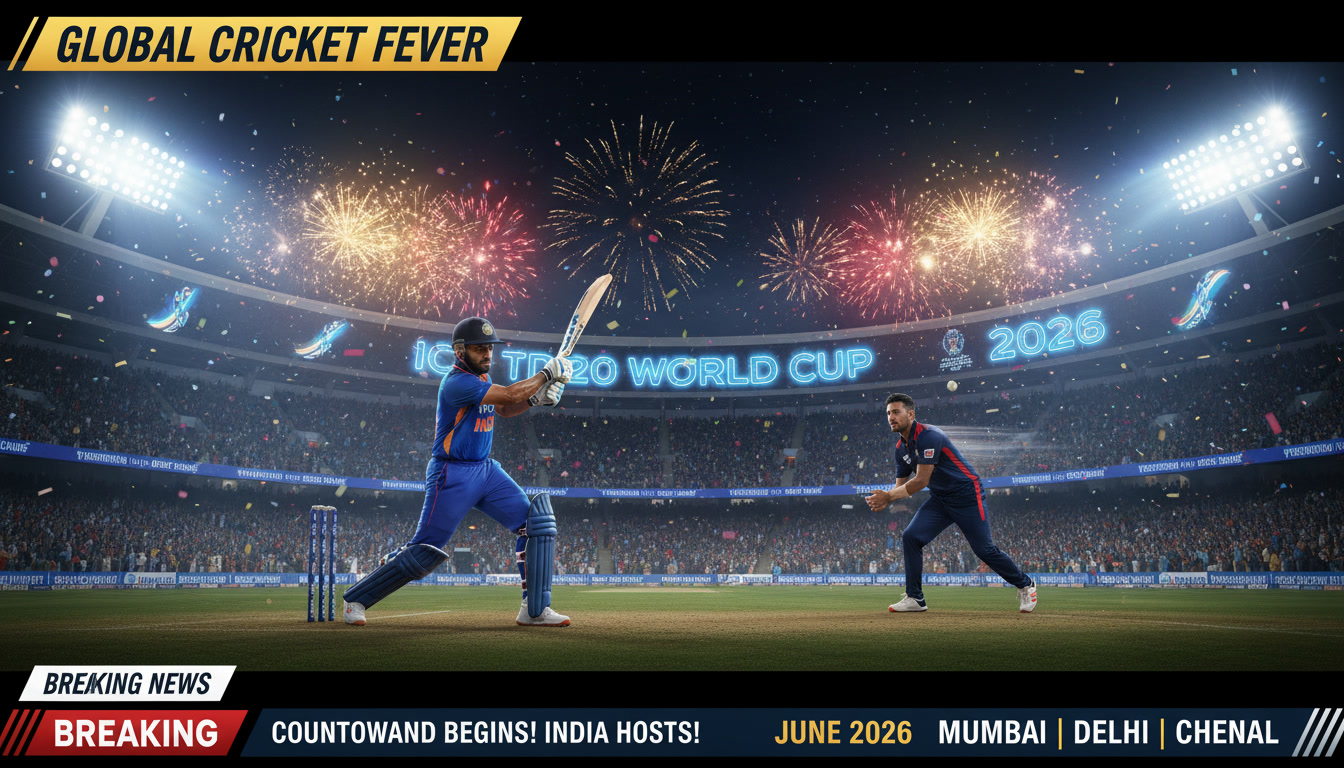

ICC Men’s T20 World Cup 2026: A Subcontinental Cricket Carnival Returns Home
There’s something magical about cricket in the Indian subcontinent. The packed stadiums, the deafening roar of fans, the street corners buzzing with heated debates over team selections – it’s not just a sport here, it’s a religion. And come June 2026, this passion will reach fever pitch when India and Sri Lanka co-host the ICC Men’s t20 world cup 2026.
I still remember the electricity in the air during the 2016 T20 World Cup in India. Every match felt like a festival. Now, a decade later, we’re getting ready to do it all over again, and honestly, the anticipation is already building up.
Why This Tournament Feels Different(t20 world cup 2026)
Look, we’ve had plenty of World Cups over the years. But there’s something special brewing for 2026. For starters, it’s been a while since we’ve had a major ICC event across these two cricket-crazy nations together. The last time India hosted a T20 World Cup was back in 2016, and Sri Lanka has been waiting even longer to showcase its hospitality on such a grand stage.
What makes this particularly exciting is the timing. Both nations have been investing heavily in their cricket infrastructure. New stadiums have come up, existing ones have been renovated, and the facilities are getting better by the day. This isn’t just about hosting matches – it’s about creating an experience that fans will remember for years.
The Venues: Where Dreams Will Be Made and Broken
The ICC and the host boards are still finalizing the exact venues, but we can expect matches across some of the most iconic cricket grounds in the world. India alone has over a dozen world-class stadiums that can host international matches. From the historic Eden Gardens in Kolkata to the magnificent Narendra Modi Stadium in Ahmedabad – the world’s largest cricket stadium – fans are in for a treat.
Then there’s Sri Lanka, with its own set of beautiful venues. The R. Premadasa Stadium in Colombo and the Pallekele International Cricket Stadium have hosted numerous international matches and always deliver when it comes to atmosphere. Playing in Sri Lanka adds a different dimension altogether – the weather, the conditions, and those passionate Lankan fans who never give up on their team.
What I’m really looking forward to is seeing how teams adapt to different conditions. The pitches in India can vary dramatically – from the turning tracks of Chennai to the batting paradises of Mumbai. Sri Lanka typically offers conditions that assist spin bowling, which could make for some fascinating tactical battles.
The Historic Significance of Co-Hosting
There’s a beautiful symmetry in India and Sri Lanka coming together to host this tournament. These are two nations where cricket isn’t just followed – it’s lived. The streets empty when matches are on, offices become quieter, and everyone seems to have an opinion on what the captain should’ve done differently.
Co-hosting also strengthens the bond between these neighboring nations. Cricket has always been a bridge in South Asian diplomacy, bringing people together despite political differences. When fans from both countries gather in stadiums, cheering for their teams while respecting each other’s passion, it creates moments that transcend sport.
The Format: More Teams, More Drama – t20 world cup 2026
The 2026 edition is expanding to include 20 teams, up from the 16 that participated in recent tournaments. This is huge for cricket’s growth. More teams mean more competitive matches, more upsets, and more opportunities for emerging cricket nations to showcase their talent on the biggest stage.
We’ll likely see the tournament structured in multiple phases – a preliminary round followed by Super 12s or a similar format, leading into the knockouts. This structure ensures that every match matters, and teams can’t afford to have an off day. Remember Afghanistan’s rise in recent T20 World Cups? Or how Ireland has troubled the big teams? With more participants, expect even more such David versus Goliath stories.
What the Expansion Means for Associate Nations
The inclusion of 20 teams is a game-changer for cricket’s Associate Members. Countries like Nepal, UAE, Namibia, and Scotland have been knocking on the door for years, proving that they deserve more opportunities at the highest level. This expansion gives them that platform.
For these teams, just participating in a World Cup is a victory in itself. But we’ve seen enough upsets in T20 cricket to know that on any given day, any team can beat any other team. That’s the beauty of this format – 20 overs can change everything in a flash.
The Contenders: Who’s Got What It Takes
Let’s be real – India will enter as one of the favorites, especially playing at home. The Indian team has been building a formidable T20 squad with the perfect blend of experience and youth. Players like Rohit Sharma might still be around (age is just a number when you’re that talented), and the young brigade – think Shubman Gill, Yashasvi Jaiswal – will be at their peak by then.
But here’s the thing about T20 cricket – it’s the great equalizer. England has shown with their back-to-back T20 and ODI World Cup wins that they’ve cracked the white-ball code. Australia is always dangerous, no matter the format or conditions. Pakistan, with their unpredictability, can beat anyone on their day (and lose to anyone too, but that’s part of their charm).
The West Indies might not be the force they once were, but written them off at your own peril in T20s. New Zealand continues to punch above their weight in every tournament. South Africa is desperately looking to break their knockout curse. And Sri Lanka, playing at home, could well channel the spirit of their 2014 T20 World Cup win.
Don’t forget Bangladesh and Afghanistan either. Both teams have players who can single-handedly change the course of a match. Rashid Khan, for instance, is one of the most feared bowlers in T20 cricket worldwide.
The Rising Stars to Watch Out For – t20 world cup 2026
By 2026, we’ll be seeing a new generation of cricketers at their peak. Players who are just breaking into international cricket today will be established stars by then. The IPL and other T20 leagues around the world are producing talent at an unprecedented rate.
Think about young Indian talents like Yashasvi Jaiswal, Rinku Singh, or Tilak Varma. Players from other nations like Pakistan’s Saim Ayub, Australia’s Jake Fraser-McGurk, or England’s Will Jacks could all be household names by 2026. This tournament will be their stage to announce themselves to the world.
The Fan Experience: More Than Just Cricket(t20 world cup 2026)
If you’ve ever been to a cricket match in India or Sri Lanka, you know it’s an experience unlike any other. The food alone is worth the ticket price – from samosas and pakoras to kottu roti and hoppers, your taste buds are in for as much of a treat as your eyes.
The organizers are promising enhanced fan engagement activities. We’re talking fan parks, interactive zones, meet-and-greets with former cricketers, and cultural programs showcasing the rich heritage of both nations. Cricket tourism is going to be massive during this period. People from around the world will come not just for the matches but to experience the culture, the food, and the hospitality that the subcontinent is famous for.
Imagine watching a match in Mumbai and then spending a day exploring the city. Or catching a game in Kandy and then visiting the Temple of the Tooth. This tournament is going to be a perfect blend of sport and culture.
Creating Memories: The Festival Atmosphere
One thing that sets tournaments in the subcontinent apart is the festival-like atmosphere. It’s not uncommon to see fans arriving at stadiums hours before the match starts, dressed in their team colors, faces painted, carrying flags and banners. The energy is infectious.
Street vendors selling team merchandise, local musicians performing outside stadiums, fan zones with big screens – it all adds to the carnival atmosphere. This isn’t just about watching 22 players on a field; it’s about being part of something bigger, a collective celebration of the sport we all love.
The Economic Impact: Beyond the Boundary
Let’s talk numbers for a moment. A tournament of this magnitude brings significant economic benefits. Hotels will be packed, restaurants will be buzzing, local businesses will thrive. The 2023 ODI World Cup in India generated revenue running into billions, and the T20 World Cup in 2026 is expected to match, if not exceed, those figures.
For Sri Lanka, this is particularly important. The nation has faced economic challenges in recent years, and hosting a major sporting event provides a much-needed boost. It’s not just about the direct revenue from ticket sales and broadcasting rights – it’s about putting the country back on the global map as a tourist destination.
Job creation is another massive benefit. From ground staff to hospitality workers, from security personnel to event managers, thousands of people will find employment opportunities directly or indirectly related to the tournament.(t20 world cup 2026)
Tourism Boost and Long-term Benefits
The tourism sector stands to gain immensely from this event. Cricket fans are known to be excellent tourists – they don’t just come for the match and leave. Many plan entire vacations around World Cup fixtures, exploring multiple cities, trying local cuisines, and immersing themselves in local culture.
The infrastructure developed for the tournament – improved roads, upgraded airports, better public transport – these remain long after the final ball is bowled. It’s an investment that keeps giving returns for years to come.
The Broadcast and Digital Revolution(t20 world cup 2026)
By 2026, the way we consume cricket is going to be even more advanced than it is today. We’re already seeing 4K broadcasts becoming standard, multiple camera angles, player-tracking technology, and real-time statistics. Imagine watching a match with augmented reality features, where you can see wagon wheels and pitch maps overlaid on your screen in real-time.
Social media engagement during T20 World Cups is off the charts. Every boundary, every wicket, every controversial decision becomes a trending topic within seconds. The memes, the reactions, the expert opinions (and the not-so-expert ones) – it all adds to the entertainment value.
Streaming platforms are also revolutionizing access. Fans who can’t make it to the stadium can still feel connected, watching on their phones, tablets, or smart TVs. Some platforms are even experimenting with personalized viewing experiences where you can choose your own commentary team or camera angles.
The Social Media Phenomenon
T20 World Cups are now as much about social media moments as they are about on-field action. Every match generates millions of tweets, Instagram posts, and TikTok videos. Players have become social media stars, with their every move tracked and shared by millions of followers.
The meme culture around cricket has exploded. A dropped catch, an animated celebration, a funny expression caught on camera – everything becomes content. This digital engagement keeps fans connected to the tournament 24/7, not just during the three hours of match time.
The Challenges: It Won’t All Be Smooth Sailing(t20 world cup 2026)
Let’s be honest – organizing a tournament of this scale comes with its share of challenges. Weather can be unpredictable, especially during the monsoon season. The organizers will need backup plans and reserve days for crucial matches. We saw how rain affected several games in the 2021 T20 World Cup – lessons need to be learned.
Security is another paramount concern. With thousands of fans traveling across borders and cities hosting high-profile matches, ensuring everyone’s safety requires meticulous planning and coordination between multiple agencies.
Then there’s the pressure on infrastructure. Can the airports handle the sudden surge in international arrivals? Are there enough hotel rooms? How will traffic management work during match days? These are questions that need addressing well in advance.
Preparing the Grounds: The Curators’ Challenge
Let’s talk about something that doesn’t get enough attention – pitch preparation. Curators across India and Sri Lanka will be under immense pressure to deliver pitches that are fair to both bat and ball. Nobody wants one-sided games that finish in 15 overs.
The balance is tricky. Make the pitches too batting-friendly, and you get high-scoring run-fests with little contest. Make them too bowler-friendly, and matches become low-scoring slogs. The ideal T20 pitch offers something for everyone – bounce for the pacers, turn for the spinners, and still allows good batsmen to score runs.
Looking Ahead: What This Means for Cricket’s Future(t20 world cup 2026)
The 2026 T20 World Cup isn’t just about one tournament – it’s about cricket’s trajectory over the next decade. The expansion to 20 teams reflects ICC’s commitment to globalizing the sport. Every tournament held in cricket’s heartland also serves as inspiration for millions of youngsters watching.
Think about it – some kid watching this tournament from a small town might be representing their country in future World Cups. That’s the power of hosting events like these. They inspire, they connect, and they create dreams.
For India and Sri Lanka, successfully hosting this tournament also strengthens their bid for future events. The experience gained, the infrastructure developed, and the systems put in place all contribute to becoming reliable hosts for major sporting events.
The Women’s Game and Growing Inclusivity
While we’re talking about the men’s tournament, it’s worth noting that the success of these events paves the way for women’s cricket too. The 2023 Women’s T20 World Cup showed us the incredible talent in women’s cricket. The infrastructure and enthusiasm generated by the men’s World Cup will benefit women’s cricket in the region.
India and Sri Lanka have been investing in women’s cricket programs, and hosting major events brings attention and resources to these initiatives. The young girls watching the 2026 World Cup might well be representing their countries in future women’s tournaments.
The Legacy Factor: Beyond the Trophy – t20 world cup 2026
Every World Cup leaves behind a legacy. It’s not just about who lifts the trophy on the final day. It’s about the stories created, the heroes who emerge, the underdog victories that inspire millions, and the infrastructure that remains.
The 2011 ODI World Cup gave India new stadiums and upgraded facilities. The 2016 T20 World Cup showed the world the passion of Indian fans. The 2026 edition will have its own legacy to create – perhaps it’ll be remembered as the tournament that truly globalized T20 cricket, giving smaller nations their biggest platform yet.
The Verdict – t20 world cup 2026
The ICC Men’s T20 World Cup 2026 promises to be something special. It’s got all the ingredients – passionate fans, world-class venues, competitive teams, and the unpredictability that makes T20 cricket so thrilling. Whether you’re a die-hard cricket fan or someone who just enjoys the occasional match, this tournament will have something for everyone.
As we count down the months to June 2026, one thing’s certain – the subcontinent is ready to show the world how cricket should be celebrated. It’s going to be loud, it’s going to be colorful, and it’s going to be absolutely unforgettable.
So mark your calendars, start planning your trips, and get ready for what promises to be one of the most exciting cricket tournaments in recent memory. The stage is set, the players are preparing, and soon, very soon, the carnival begins.
if you want to read other blog post than click – BLOG
About the Author